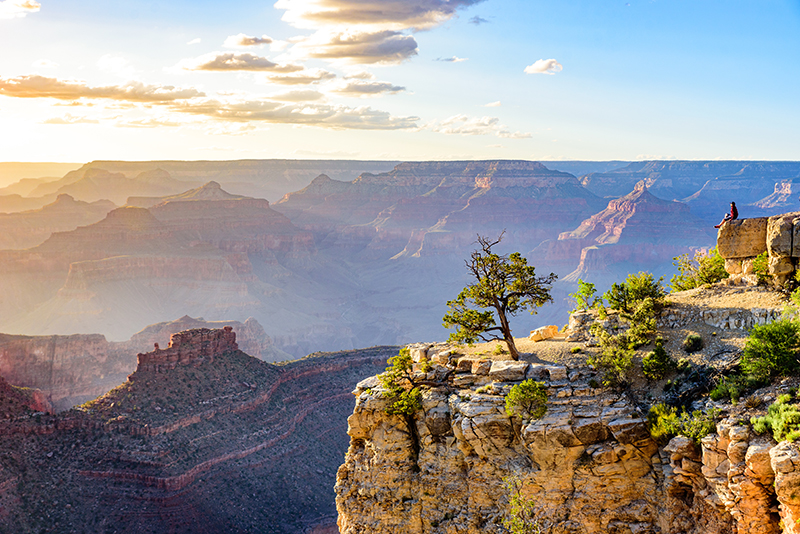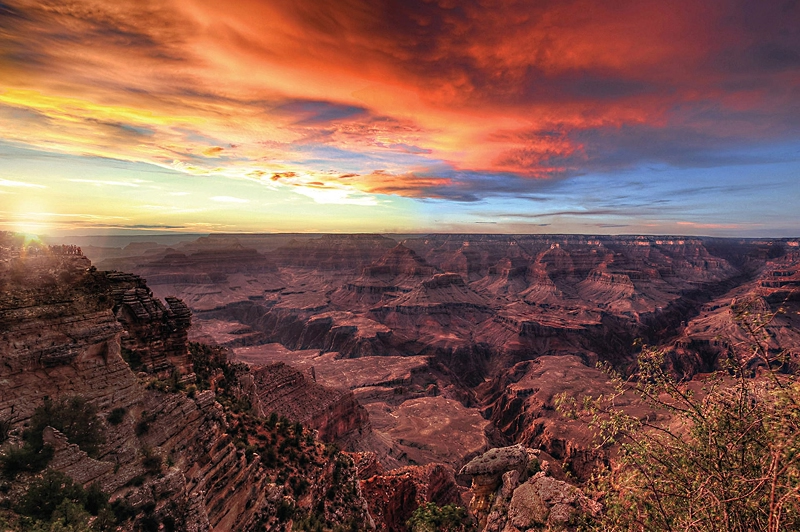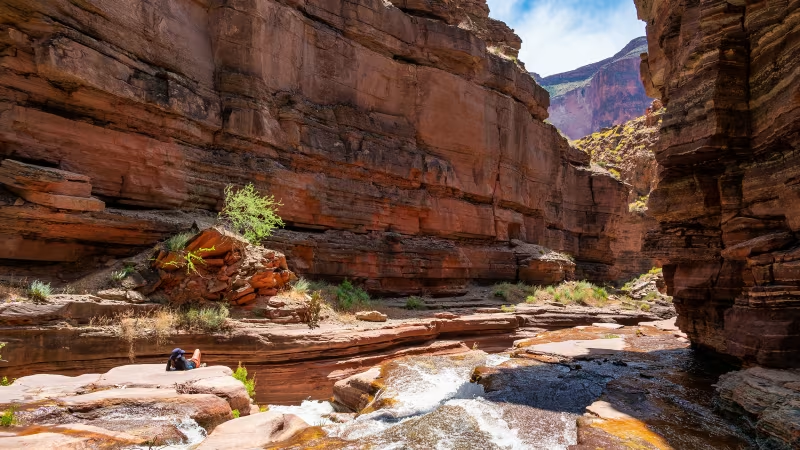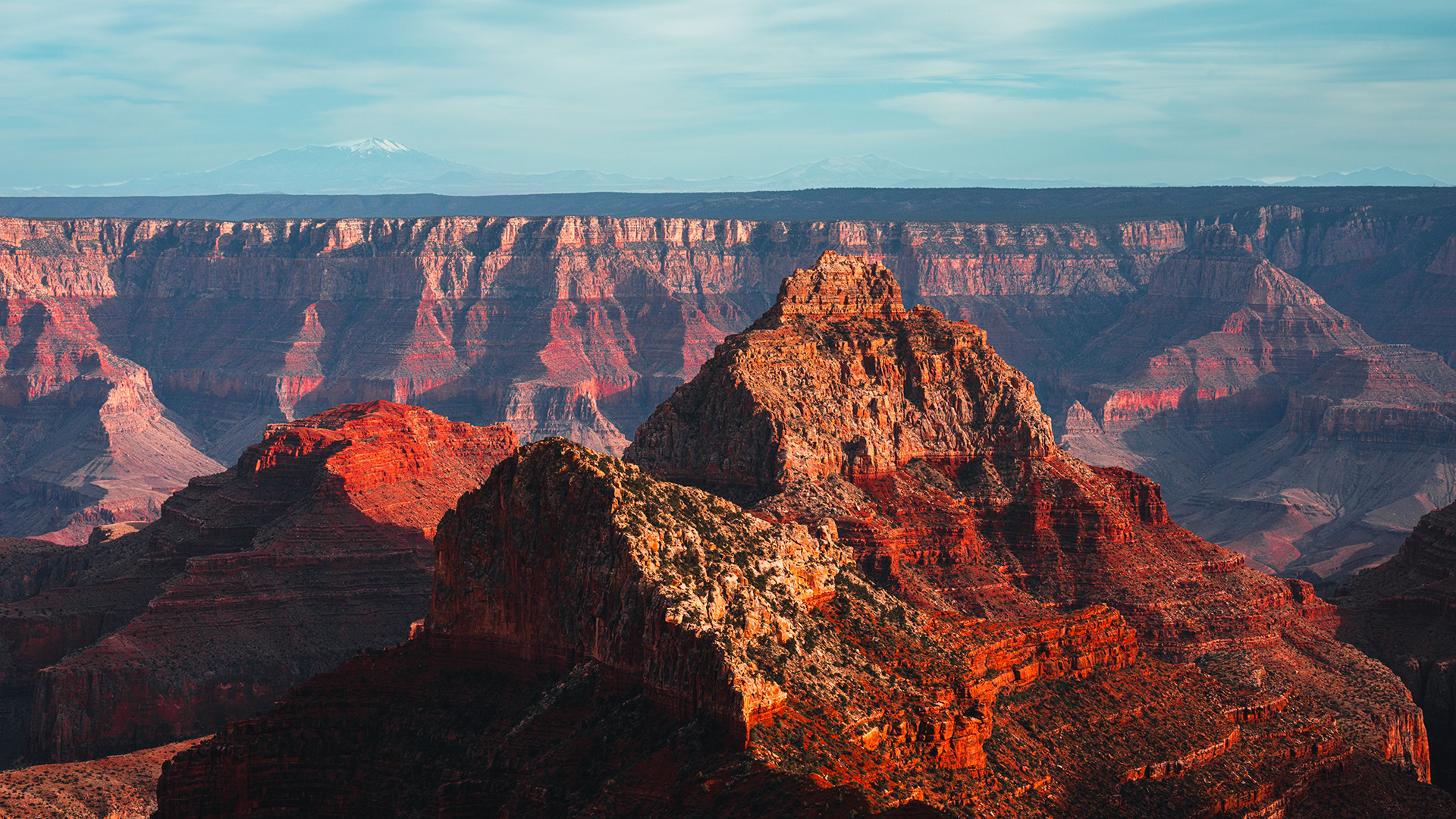
Experiencing the enormity of Grand Canyon in both its size (277 miles long and 18 miles wide) and depth (1 mile from rim to river) is one reason millions of visitors pilgrimage to this special place. Then there’s its geology billions of years in the making, a colorful rainbow of rock strata layering the canyon’s sides, and, of course, the incredible diversity of flora and fauna that call the canyon home. You’ll want to see and explore it all! But figuring out logistics can be daunting. Rest easy: Here’s everything you need to know to visit Grand Canyon National Park, from driving directions to what to bring and when to visit.
2026 Update
In July 2025, the Dragon Bravo Fire burned more than 145,000 acres, affecting Grand Canyon National Park’s North Rim and inner canyon. The South Rim was not affected and remained open, but the North Rim closed temporarily. On May 15, it opened for the 2026 season with limitedaccess and services. Check the park’s website for updates on the North Rim’s concessionaires, campgrounds and trails.
Getting to the Grand Canyon
To get to the South Rim, take I-40 exit 165 and head north on AZ-64 for 55 miles into the park. From Flagstaff, follow US-180 west to Valle, where it merges with AZ-64. Turn right and continue to the park. You can also enter from the east on AZ-64 from Cameron.
To get to the North Rim, take US-89 to where it splits and head west on US-89A through Marble Canyon to Jacob Lake. Turn left at AZ-67 and head into the park.
The Basics
_Grand%20Canyon%20Chamber%20of%20Commerce%20%20.png)
When to go
You can visit the South Rim year-round; the North Rim is open mid-May through mid-November. To avoid the crowds at either rim, visit before the school year ends or after it starts. Excluding fall and spring breaks, shoulder season offers cooler temperatures and a quieter experience, while winter brings the chance to see the canyon with a dusting of snow and fewer people to interrupt the view.
What it costs
Entrance fees cost $35 per motorized vehicle for U.S. residents. Non-residents must pay an additional $100 per person to enter the park. Both U.S. residents and non-residents can purchase an “America the Beautiful” annual pass ($80/residents, $250/non-residents), which covers the per-vehicle cost of admission to any U.S. National Park for one year.
What you’ll need
In Arizona, you should always carry water with you to stay hydrated, but it’s particularly essential on the North Rim. Before your trip, check with the park to find out if the North Rim has resources such as potable water, food or gasoline; sometimes these are not available.
Besides water, you should bring:
- layers of clothing
- closed-toed shoes for trails
- sunscreen, even in the winter
- sunglasses and a wide-brimmed hat
What to pack
You will want a camera. If you’re using your cell phone for pictures, bring a charger. Amateur photographers should pack extra batteries and memory cards for digital cameras. Consider a tripod for long exposure shots at dusk and dawn.
A Day at Grand Canyon National Park
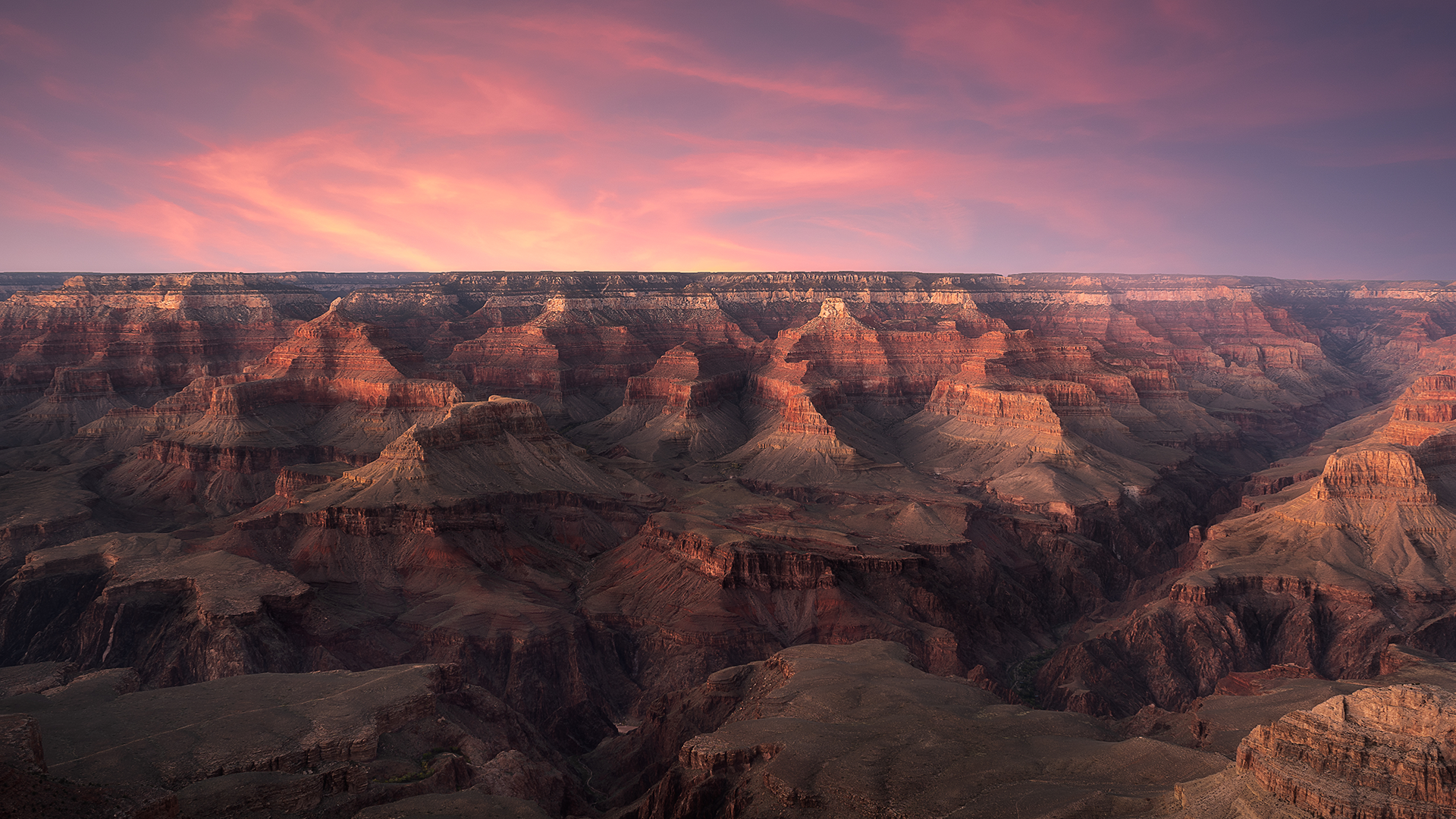
For a visit to the popular South Rim, Joëlle Baird, the public affairs officer for the park, recommends arriving early to mitigate wait times at the entrance. Then take the shuttle to the overlooks, or walk the paved, accessible Rim Trail, which stretches 13 miles from the South Kaibab Trailhead to Hermits Rest.
The South Rim offers more to do beyond walking along the edge. You can rent bikes, hike into the canyon or, if you book ahead of time, ride a mule to the canyon floor. The South Rim also boasts architectural landmarks like Hopi House, where you can buy authentic American Indian crafts, and a full schedule of ranger programs.
At the North Rim, drive the paved roads and view the canyon from the overlooks, but first, visit the park’s website for updates about trail access and available services. Baird emphasizes that, for North Rim visits, always plan ahead and prepare to be self-sufficient — i.e., bring your own food and water.
Where to Stay

On the North Rim, choose from lodging options in the nearby town of Page. On the South Rim, stay inside the park at Grand Canyon Village’s historic lodges and campgrounds. Or stay just outside the entrance in Tusayan, where you’ll find several national brand hotels.
Here are two accommodations to consider:
- Maswik Lodge: This 280-room South Rim lodge isn’t as close to the canyon as its iconic neighbor, El Tovar Hotel, but it has a major advantage — its south complex buildings feature elevators to its second floor.
- Under Canvas Grand Canyon: Located about 30 minutes from the South Rim, Under Canvas offers upscale tents with private bathrooms, king-size beds and organic bath products, along with stargazing, yoga and an onsite restaurant.
Electric Vehicle Charging Stations near Grand Canyon National Park
At the South Rim, there are two EV chargers available near 1 Mather Business Center, plus three Tesla superchargers at Yavapai Lodge. Minutes from the South Rim gate, the Grand Canyon Visitor Center IMAX in Tusayan has six charging stations, and the Grand Hotel has 12 Tesla superchargers.
Leave No Trace
Following Appreciate AZ guidelines helps keep Grand Canyon protected from wildfires and free from trash and debris, allowing this beloved landmark to remain stunning for generations to come.


Teresa Bitler
Teresa Bitler is an award-winning travel writer whose work has appeared in National Geographic Traveler, American Way, Wine Enthusiast, and AAA publications. She is the author of two guidebooks and a contributor to Fodors Arizona & The Grand Canyon.